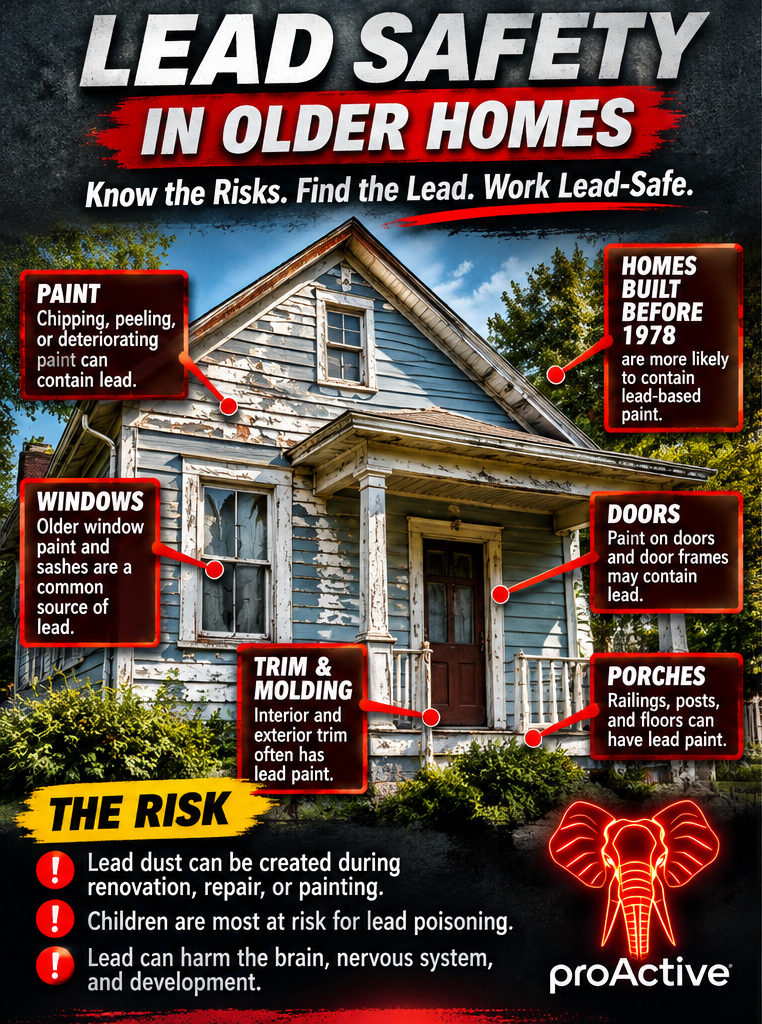
We get these calls. Somebody just found out their house is from 1940, or a contractor left a mess, or a neighbor mentioned lead, and now they are worried about their kids. Here is the order I would go in, and it is not the order most people start with.
First: find out about the people, not the house
EPA’s guidance is direct on this. A blood lead test is the best way to find out whether you or a family member has been exposed to lead.
Call your pediatrician or your local health department. It is a simple test, many programs cover it for young children at no cost, and in some places it is already part of routine well-child visits. Whatever the house turns out to contain, the test tells you the thing you actually want to know.
Your doctor interprets the result and decides what, if anything, comes next. That is a medical conversation, not a contractor one, and anybody in my trade who tells you what a number means is out of their lane.
Second: the everyday measures
These are free or close to it and they matter more than people expect, because the exposure route is dust on hands and floors.
Clean floors, window sills and window troughs regularly with wet methods rather than dry sweeping. Wash children’s hands before meals and before bed, and wash their toys. Take shoes off at the door, since soil tracked in is one of the main pathways. Keep painted surfaces in good repair, because intact paint is far less of a problem than paint that is chipping or chalking. And feed kids a nutritious diet; EPA lists it among the protective measures.
Third: find out about the house, if you want to
For a real answer about the building, hire a certified professional. A lead-based paint inspector tells you where lead-based paint is. A risk assessor goes further and identifies hazards and what to do about them. If you have young children and a pre-1978 house, the risk assessment is usually the more useful of the two.
Consumer test kits from the hardware store are not the same thing. EPA’s recognition of test kits applies to use by certified professionals, and the Consumer Product Safety Commission advises consumers to be cautious with them.
Also, ask the seller or landlord for what they already have. Federal law requires them to disclose known lead-based paint and provide available records and reports before you are obligated under a contract or lease. There may be a report in a file somewhere already.
Fourth: control what happens next
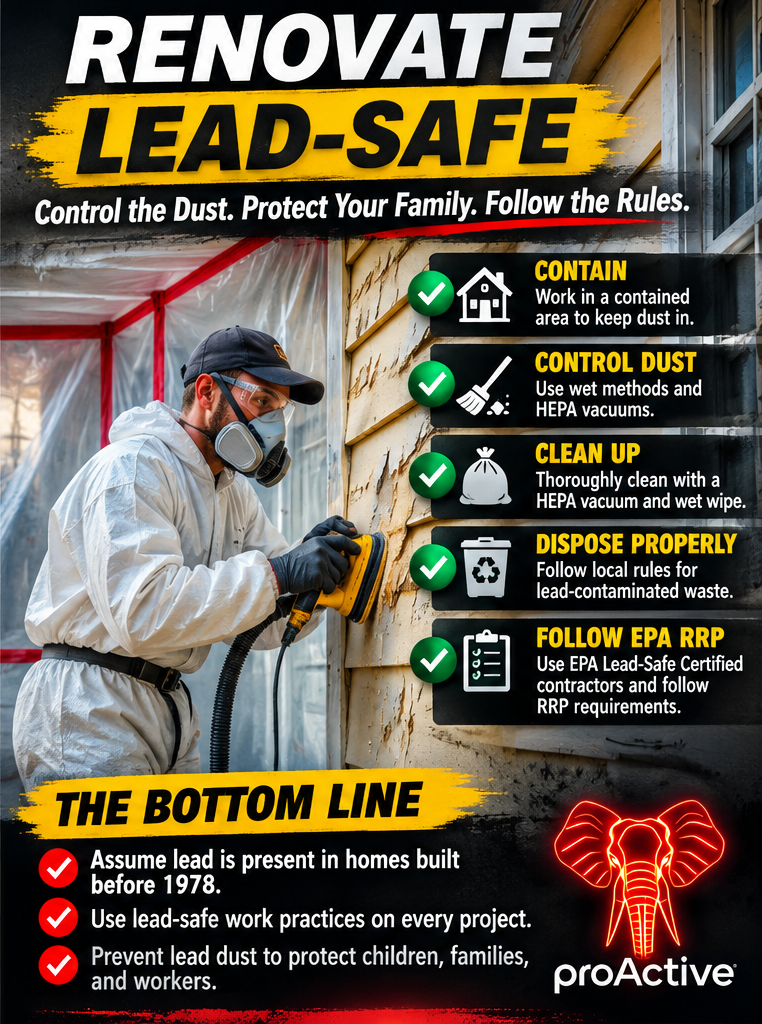
Most renovation-related exposure is preventable, and the prevention is the contractor you choose. Hire a lead-safe certified firm for any work in a pre-1978 home, ask to see the firm certification and the renovator’s course certificate, and expect them to hand you the Renovate Right pamphlet before they start.
And if you are doing the work yourself, the rule does not apply to you but the dust does not care. Contain the area, work wet, and clean thoroughly.
Where to get help
The National Lead Information Center, 1-800-424-LEAD, answers questions and can refer you to certified professionals. EPA’s online search tool lists lead-safe certified firms by location. Your county or state health department often has a childhood lead program with local resources, and in some areas, free testing.
The practical takeaway
Blood test first, everyday cleaning second, professional evaluation of the house third, and a certified contractor for any work that disturbs paint. An old house with intact paint and a family that cleans and washes hands is a manageable situation, not an emergency.
Learn more
Contractors can get certified in our EPA RRP Initial Lead Renovator class. Homeowners with questions are welcome to reach out, though for anything medical, start with your doctor.
Source: EPA Lead-Based Paint Program Frequent Questions (updated January 12, 2026). This article summarizes publicly available information and is not medical or legal advice. Anyone concerned about a possible lead exposure should contact a physician or their local health department.